
The economic system must facilitate the acquisition of all needed resources by the mother and the family as they are the first educational institution for the development of all members of society. If, as in my situation, the paycheck is the conduit for accessing the human necessities required for sustaining and enhancing life, then each and every family must have an adequate paycheck. This is the issue which cries out currently for an increase to the minimum wage to become at least $15.00 per hour. From my point of view this political / economic debate is contentious. Additionally, readers can research the poverty rate and learn how many individuals live below that poverty rate.
From Wikipedia, I cite a beginning point from its article on Poverty in the United States, from which readers may further their research:
Poverty in the United States of America refers to people who lack sufficient income or material possessions for their needs. The U.S. federal government uses two measures to measure poverty: the poverty thresholds set by the U.S. Census Bureau, used for statistical purposes, and the poverty guidelines issued by the Department of Health and Human Services, which are used for administrative purposes. Poverty thresholds, which recognize poverty as a lack of those goods and services [that] are commonly taken for granted by members of mainstream society, consist of income levels. On the other hand, poverty guidelines are simpler guidelines that are used to determine eligibility for federal programs such as Head Start and food stamps.
According to a 2018 assessment by the U.S. Census Bureau, the percentage of Americans living in poverty has fallen to the lowest levels since the 2008 recession and stands at 11.8% (~38.1 million people).
To highlight, I wish to call attention to the last line of this citation. Please note that even though poverty as defined above has “fallen to the lowest levels since the 2008 recession,” that low accounting of 11.8% of the population accounts for about 38.1 million people. That is a vast amount of people living in poverty. Wikipedia starts this essay with: “Poverty in the United States refers to people who lack sufficient income or material possessions for their needs.” To this accounting, consider that, out of 171 nations listed by Wikipedia according to median and mean wealth per adult, The United States ranks 22nd with a median wealth per adult at $65,904 and a mean wealth per adult at $432,365.
From the Federal Register: The Daily Journal of the United States Government, I obtained the following:
The poverty guidelines continue to be derived from the Census Bureau’s current official poverty thresholds; they are not derived from the Census Bureau’s Supplemental Poverty Measure (SPM).
The following guideline figures represent annual income.
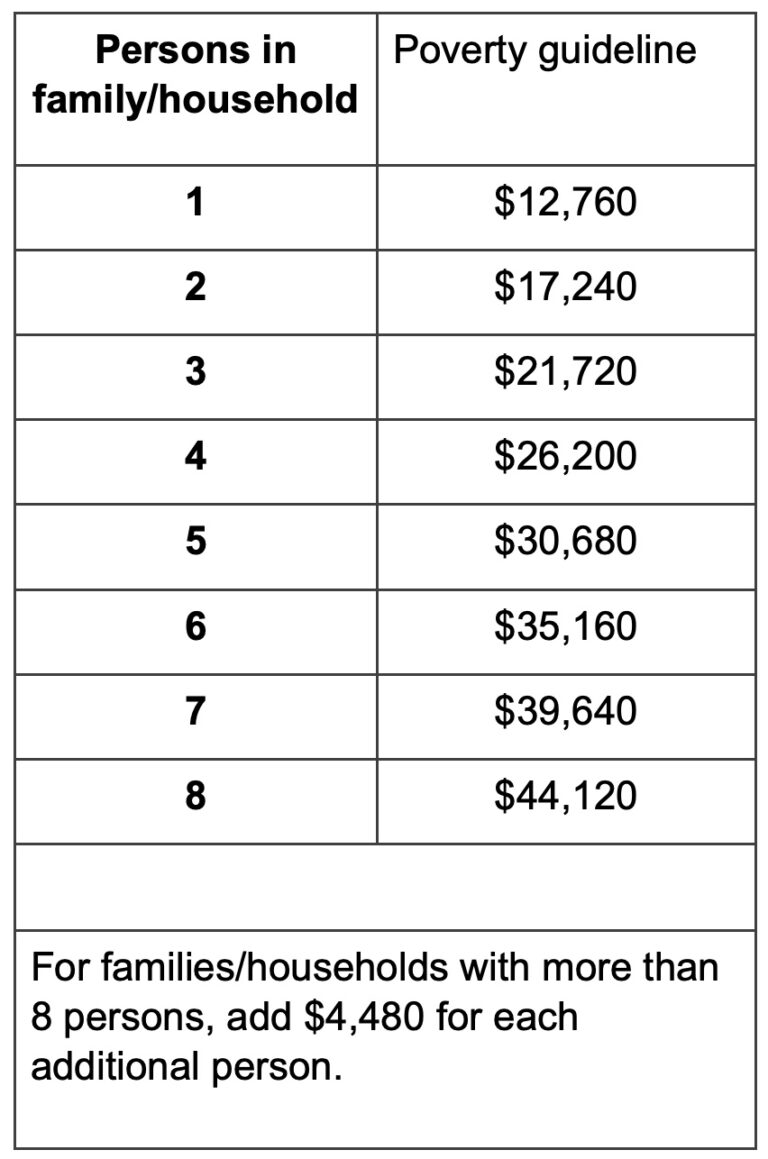
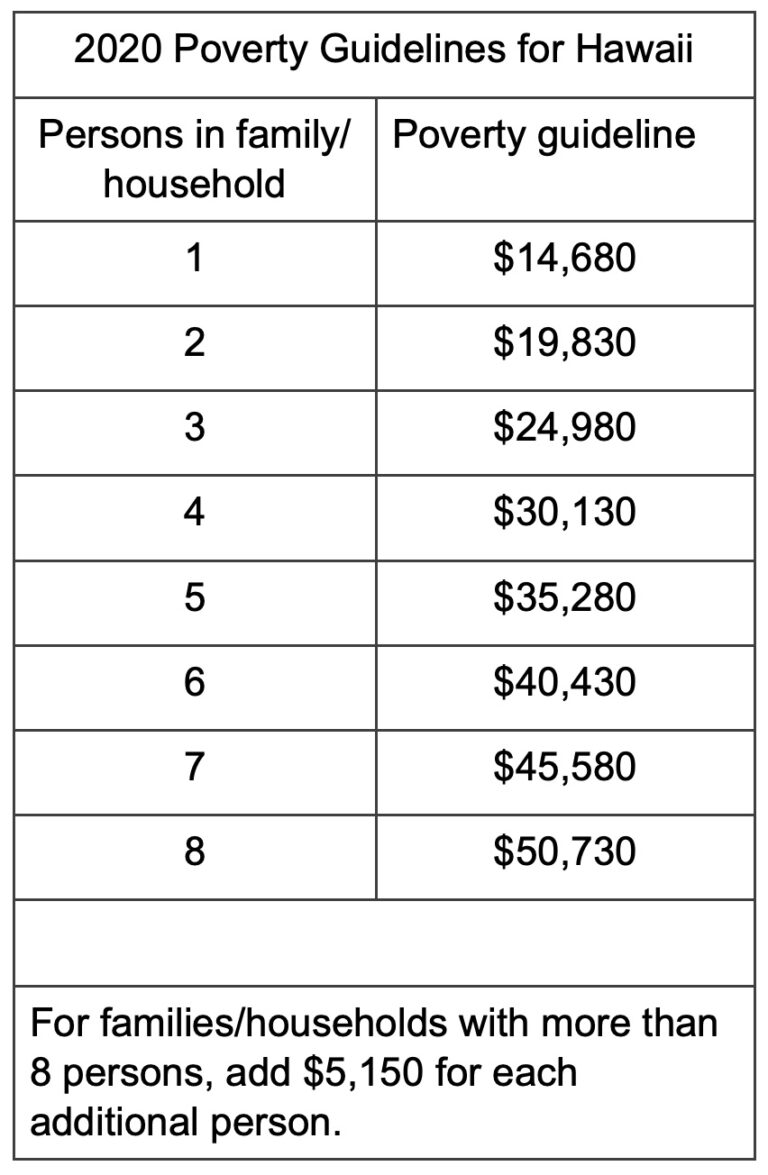
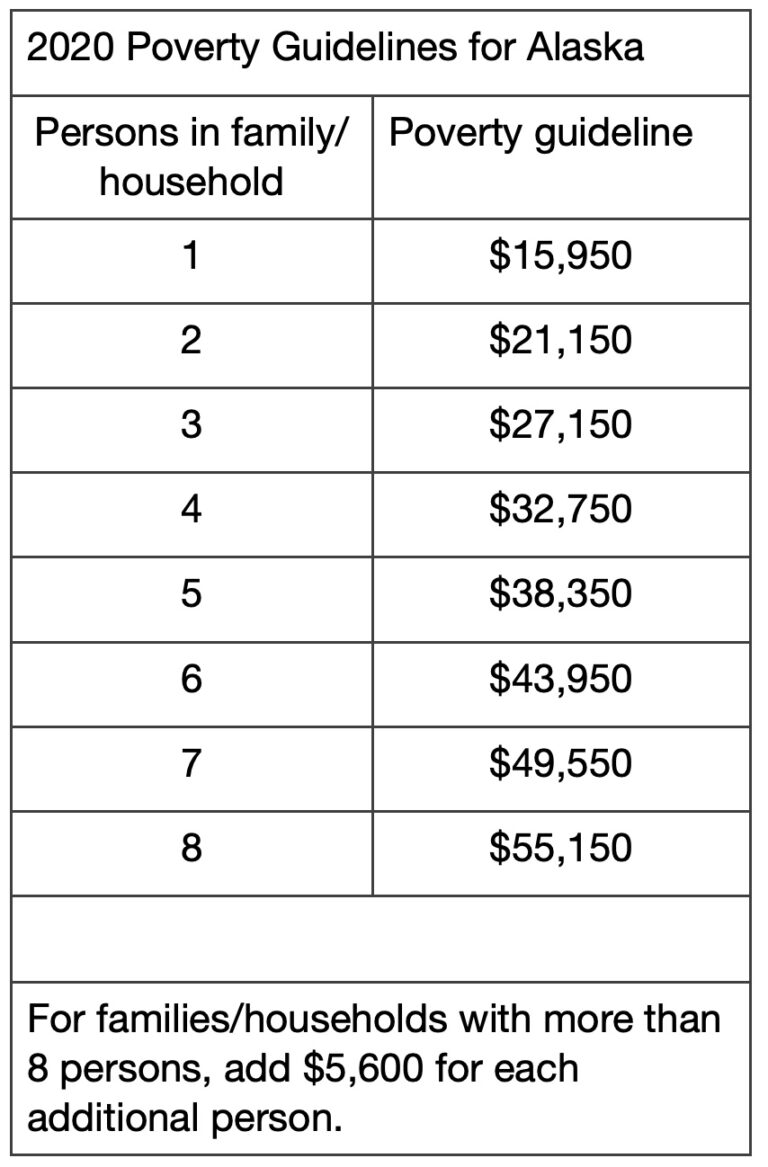
Compare the incomes delineated for poverty to the wealth assessment of the United States via median wealth per adult being $65,904 and the mean wealth per adult being $432,365. The figure of $65,904 is the middle figure of all annual incomes earned in the U.S. The poverty level for one individual is $12,760. The average of all of the annual incomes earned in the U.S. added together and divided by the total number of annual incomes collected and surveyed is $432,365. The poverty level for one individual is a far, far, far point form the average annual income. Again, there are 38.1 million people living in poverty in the U.S.
While mathematics is extremely useful and very beneficial to human life, mathematics has a severely catastrophic weakness that is minimized at best, but at worst, this weakness is ignored totally. Mathematics is used at times because of a desire to exploit this weakness. Mathematics is without emotional content. Mathematics is sterile. Mathematics by its very nature dehumanizes. This dehumanization occurs the instant that a human life, a person, is relegated to a single number. While many individuals may tout that the current economy is strong because the percentage of Americans in poverty is currently at “the lowest levels since the 2008 recession,” the 38.1 million individuals (38,100,000) may not see it that way.
Experience, I have been told, is everything. Those of us who have never experienced significant poverty cannot know poverty. In fact, poverty is not something the human knows. Poverty is a human condition. Humans feel poverty. When you feel poverty, the spirit, the soul, aches. As the aching continues, the soul begins to numb-up as a defense against the hardship of a life that is only endured. Again, a poem is needed here, not mathematical analysis.
Agápē realities are felt. Agápē realities are lived. Agápē realities are a condition of being. However, philosophical treatises are needed to expand the consciousness. An expanded consciousness is required to open the individual to enter into an agápē experience. Recall, also, consciousness is not merely intellect and/or logic.
Consider now the words of United States Commerce Chief, Wilbur Ross. He is addressing the state of affairs of the 800,000 federal employees who had to go without paychecks for 35 consecutive days from December 21, 2018 to January 25, 2019 because of a partial government shutdown (the longest in the history of the United States of America).
Wilbur Ross – a self-proclaimed billionaire and one of the richest members of Trump’s cabinet – was asked about federal workers turning to places like homeless shelters for food donations as the partial government shutdown drags on into its second month.
“I know they are, and I don’t really quite understand why,” he said in an interview on CNBC’s Squawk Box. “The obligations that they would undertake, say borrowing from a bank or a credit union, are in effect federally guaranteed. So the 30 days of pay that some people will be out, there’s no real reason why they shouldn’t be able to get a loan against it.”**
Durkin continues reporting Ross’s comments with:
“You’re talking about 800,000 workers, and while I [Ross] feel sorry for the individuals that have hardship cases, 800,000 workers. If they never got their pay – which is not the case, they will eventually get it, but if they never got it, you’re talking about a third of a percent of our GDP. So it’s not like it’s a gigantic number overall.”
** The Guardian, January 24, 2019, posted 18.34 EST by Erin Durkin (New York): “Trump commerce chief wonders why federal workers are using food banks.”
Now we should consider the words of Alan Greenspan, the chairman of the Board of Governors of the Federal Reserve from August 11, 1987 to January 31, 2006. Greenspan observes in his book,The Age of Turbulence.***
…there is persistent widespread questions of the justice of how unfettered competition distributes its rewards. Throughout this book I point to the continued ambivalence of people to market forces. Competition is stressful because competitive markets create winners and losers. (Page 16.)
*** The Age of Turbulence, p. 16 (2007: The Penguin Press: New York )
Competition which gives rise to winners and losers is interwoven into human nature at the very core of survival and was motivated not by the mind nor the heart, but was driven first of all by the stomach – eat or be eaten. I cannot imagine a more fierce form of competition than between predator and prey. It is easy to surmise that modern human competition has its root deep in the reality of the predator/prey struggle for survival.
Greenspan continues with:
Venice, I realized, is the antithesis of creative destruction. … Venice’s popularity represents one pole of a conflict in human nature: the struggle between the desire to increase material well-being and the desire to ward off change and its attendant stress.
. . . America’s material standard of living continues to improve, yet the dynamism of that same economy puts hundreds of thousands of people per week involuntarily out of work. It is no surprise that demands for protection against the forces of market competition are on the rise – as well as nostalgia for a slower and simpler time. Nothing is more stressful for people than the perennial gale of creative destruction. (Page 181)
It is worth noting that same economy that “puts hundreds of thousands of people per week involuntarily out of work,” is a matter of collateral damage in the competitive battle to “increase material well-being.” Greenspan is implying that it is required that hundreds of thousands of people must suffer while others will rise in stature as measured by an increase of material well-being. His mathematics here is hundreds of thousands per week. It is noteworthy to a humanistic heart that “per week” is critical and very, very substantial just like 38.1 million individuals living in poverty is critical and very, very substantial. Greenspan, to his credit, gives the readers a peek into the state of mind of some economists when he relates an exchange between himself and his wife. Greenspan relates his second wife’s (Andrea Mitchell’s) anecdote regarding his proposal of marriage:
She [Andrea] always jokes that it took me three tries to propose to her, because I kept popping the question in Fedspeak, but that is not true. Actually I proposed five times – she missed a couple. (Page 179.)
Then he relates the following page 181 :
As we strolled along one of the canals, my inner economist finally got the better of me. I asked Andrea, “What is the value-added produced in this city [Venice]?”
“You’re asking the wrong question,” she replied and burst out laughing.
“But this entire city is a museum. Just think of what goes into keeping it up.”
Andrea stopped and looked at me. “You should be looking at how beautiful it is.”
Of course my wife was right.
This distinction between how Alan Greenspan sees the world and how Andrea sees the world is likewise critical and significant. To my understanding, Greenspan and Ross’s intellectual orientation appears to be quite similar. The similarity I believe is that the nature of mathematics to be absent of emotion. I have other experiences which run in the same vein as those exemplified by Ross and Greenspan and it is those experiences that lead me to surmise that the development and expansion of consciousness is much more vital than merely developing and expanding one’s intelligence. This is especially true when decisions regarding the lives of humans are to be resolved.
Around 1983, a new approach to educating the individual emerged with Dr. Howard Gardner’s theory of multiple intelligences (M.I.). At first Gardner identified the following seven human intelligences:
1. linguistic
2. logical-mathematical
3. musical
4. spatial
5. body-kinesthetic
6. interpersonal (intelligence about others), and
7. intra-personal (intelligence about one’s self).
Number 8, naturalistic intelligence (the classification and understanding of Nature), was added later to the list and a ninth intelligence, existential intelligence (the intelligence to wrestle with the questions of why we live and why we die, etcetera), was being considered and evaluated. I bring M.I. up at this point to highlight a possible rationale for the difference between highly accomplished economists and mathematicians like Greenspan and Ross and those like Greenspan’s wife. There is no doubt in my mind that mathematicians and economists have strong logical-mathematical intelligence. But, the sketches that I have conveyed above cause me to wonder whether or not their interpersonal and intrapersonal intelligences are of equal status or if these individuals’ logical-mathematical intelligence rules over their interpersonal and intrapersonal intelligences. It is quite possible that an individual might have advanced or super-advanced intelligence in one area and have a much lower level of intelligence in another area. Multiple intelligences (along with the vast array of possible combinations of the different intelligences and various levels for each of those intelligences along with emotions, intuition and any pertinent nonlinear elements) strongly reinforces my position that consciousness of the individual is the critical qualifier for the quality of the character of humans.